Scoring Elamipretide’s Safety Record: What the Trials Measured, and Three Categories They Didn’t Grade
Here’s how this piece is built. Rather than starting with a verdict on SS-31 (elamipretide), the approach here treats the published trial record like a dataset to be graded on its own terms, then checked against a separate rubric: does that dataset actually describe how most people encounter this compound today. Two different questions. Conflating them is where a lot of peptide coverage goes wrong, so this one keeps them apart on purpose.
Every figure below traces to a primary source, tagged in brackets so you can check the receipts yourself. SS-31 is investigational for the uses that drive most search traffic. It carries FDA approval for exactly one rare disease. That distinction runs through the whole analysis, on safety just as much as on whether it works.
The methodology: what counts as “safety data” here
The scoring works in two passes.
Pass one asks a narrow question: in the trials that were actually run, what did researchers record? This is descriptive, not predictive. It’s a tally of adverse events, not a prediction about your vial.
Pass two applies a three-part audit to that descriptive record, checking whether it transfers to the context most people are actually asking about: unsupervised, long-term, self-directed use of a research-chemical product. The audit has three line items: product identity, exposure duration and setting, and individual screening. A trial can score well on pass one and still fail every line of pass two, and that gap is the actual finding of this article.
Pass one: what the trial data show
The largest dataset is MMPOWER-3, the phase 3 trial published in Neurology in 2023. It enrolled 218 adults with primary mitochondrial myopathy, randomized to 40 mg per day of subcutaneous elamipretide or placebo, run for 24 weeks. On efficacy, it scored a miss: no significant benefit over placebo on the six-minute walk test or fatigue measures. But size, randomization, and a 24-week window make its safety observations worth logging regardless of that miss, and here the tolerability column looks reasonably clean, with injection-site reactions as the dominant complaint rather than any signal of dangerous systemic toxicity [P1].
The earlier phase 1/2 trial, MMPOWER, points the same direction. Short-term intravenous dosing in adults with the same disease “increased exercise performance after 5 days of treatment in patients with PMM without increased safety concerns,” per the study authors [P2]. Two trials, two delivery routes, one consistent read: in the populations actually studied, the compound was tolerated, and local injection-site reactions are the recurring line item, not anything scarier.
There’s a plausible mechanistic reason this column scores well. Elamipretide isn’t a blunt instrument. It concentrates at the inner mitochondrial membrane and binds a specific lipid, cardiolipin, with high affinity, a targeted interaction characterized in a 2013 mechanism paper [P3]. A compound with one defined binding partner has, in principle, fewer avenues for scattershot off-target effects than something acting indiscriminately. That’s a reasonable contributing factor to the clean tolerability numbers, not proof of safety in every setting, and it shouldn’t be read as more than that.
A scoring quirk worth flagging: a failed trial can still be a good safety instrument
It looks odd on first pass that the most useful safety dataset comes from a trial that missed its primary endpoint. But efficacy and safety are two separate columns on the same scorecard, measured independently. MMPOWER-3 failed the efficacy column and still generated 24 weeks of monitored data for the safety column, and that second column’s numbers don’t get erased by the first column’s miss [P1]. Both readings are honest at the same time.
Where this gets misused is in how the two columns get weighted against each other. Safety never scores in isolation, it scores against benefit. A tolerable side-effect profile earns more credit when it’s paired with a demonstrated benefit. When benefit for primary mitochondrial myopathy was tested and came back negative [P1], the same clean tolerability data supports a much less exciting conclusion: probably won’t hurt you in the short term, and also probably won’t do what you were hoping for that indication. “Well tolerated” isn’t a standalone score. It only means something next to a benefit column, and for most of the popular use cases, that column is still blank. Any honest scorecard has to show both numbers side by side rather than reporting only the flattering one.
The one approval on the books, and its actual scope
In September 2025, the FDA granted accelerated approval to elamipretide, branded Forzinity, for improving muscle strength in patients with Barth syndrome weighing at least 30 kg [P4]. That’s a real data point, and it reflects a regulatory judgment that for one specific manufactured product, in one specific population, at one specific dosing, benefit outweighed risk enough to authorize it, under a pathway that stays conditional on a confirmatory trial [P4]. But the score attaches to that narrow cell only. It does not extend to research-chemical SS-31, to compounded versions aimed at other goals, or to open-ended self-directed use. Reading a narrow, indication-specific approval as a broad safety endorsement is a scoring error, plain and simple.
Audit line 1: product identity, ungraded
Every safety number above describes a specific, quality-controlled, identity-confirmed product. That’s baked into the methodology, not incidental to it. When a MMPOWER-3 participant received elamipretide, it was a defined pharmaceutical agent at a known dose and known purity [P1].
A research-chemical SS-31 vial marked “for research use only” carries no such documentation. No regulator has confirmed its identity, strength, or purity, and nothing guarantees label accuracy. Which means the trial safety score simply doesn’t transfer, because the trials never tested that product. A clean tolerability read for a defined compound tells you nothing about an unverified powder of uncertain concentration. This line item is, functionally, ungraded: not “fails,” just never measured.
Audit line 2: duration and setting, ungraded
The trial exposures were bounded and clocked. MMPOWER-3 ran 24 weeks under active medical monitoring [P1]; MMPOWER’s window was shorter [P2]. The typical wellness use pattern for SS-31 looks nothing like either: often indefinite, self-administered, unmonitored, at self-selected doses. That scenario simply never entered the dataset. There is no controlled long-term safety record for self-directed SS-31 aimed at energy, recovery, or longevity, because that use case wasn’t what the trials tested. Reading long-term safety off a 24-week monitored study is extrapolating past what the numbers can support.
Audit line 3: individual screening, ungraded
Trial participants were pre-screened, checked against eligibility criteria, reviewed for medical history, and monitored throughout [P1]. That screening is part of why the tolerability numbers came out clean, and it’s entirely absent from the research-chemical route, where nobody checks whether the compound suits a given person’s conditions, medications, or risk profile. A clean score in a vetted, monitored cohort is not the same measurement as safety for an unscreened person ordering a vial online. The protective layer that produced the good numbers is exactly the layer that route strips out.
What a supervised model changes on the scorecard, and what it can’t touch
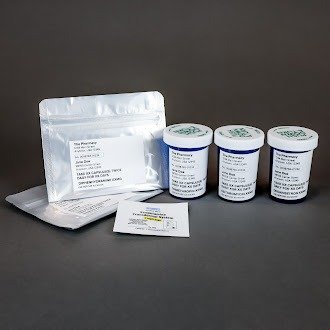
These three ungraded lines happen to be the ones a supervised medical model is built to close. Route it through a licensed clinician, and history and contraindications get reviewed before anything is dispensed. Route it through a licensed compounding pharmacy, and there’s accountability for what’s actually in the vial. Add follow-up, and the monitoring gap narrows too. FormBlends operates on that structure: physician evaluation, a prescription where warranted, a licensed compounding pharmacy, and aftercare. On the audit above, that structure restores the identity check, the screening, and the monitoring that made the original trial numbers meaningful in the first place, the same three lines the unsupervised route leaves blank.
What supervision can’t do is move the efficacy column. It doesn’t turn an investigational use into a proven one, and it doesn’t retroactively pass a trial that missed its endpoints. It improves the conditions under which the compound is used. It doesn’t upgrade the strength of the underlying evidence or hand you the approval that belongs to a different, specific manufactured drug.
The final score
Two things are true at once, and the honest scorecard keeps them both visible. Elamipretide reads as reasonably tolerated in the forms, doses, and monitored settings actually studied, with injection-site reactions as the dominant complaint and no red flag for serious systemic toxicity in those trials [P1][P2], a result that lines up with its targeted mechanism [P3]. At the same time, that record describes one specific product, given short to medium term, to screened and monitored patients, and it doesn’t score the safety of an unverified research-chemical vial, of open-ended self-directed use, or of use in someone no clinician has ever evaluated. “Tolerated in a trial” and “safe for you specifically” are different line items, and only the first one has data behind it. The most defensible read: the documented tolerability is a genuine plus, the benefit for popular uses remains unproven, and the exact conditions that produced the clean safety score are the conditions the unsupervised route removes from the equation.
Sources
- Pivotal phase 3 trial (MMPOWER-3): 218 adults with primary mitochondrial myopathy randomized to 40 mg/day subcutaneous elamipretide or placebo for 24 weeks; the trial did not meet its primary or secondary efficacy endpoints, and tolerability observations noted injection-site reactions as the most common issue rather than serious systemic events. Efficacy and Safety of Elamipretide in Individuals With Primary Mitochondrial Myopathy: The MMPOWER-3 Randomized Clinical Trial. Karaa A, et al. Neurology, 2023. https://pubmed.ncbi.nlm.nih.gov/37268435/ (full text: https://pmc.ncbi.nlm.nih.gov/articles/PMC10382259/)
- Earlier phase 1/2 dose-escalation trial (MMPOWER): short-term intravenous elamipretide “increased exercise performance after 5 days of treatment in patients with PMM without increased safety concerns.” Randomized dose-escalation trial of elamipretide in adults with primary mitochondrial myopathy. Karaa A, et al. Neurology, 2018.
- Mechanism study: SS-31 concentrates on the inner mitochondrial membrane and binds cardiolipin with high affinity, a targeted interaction with a defined molecular partner. The mitochondria-targeted compound SS-31 re-energizes ischemic mitochondria by interacting with cardiolipin. Birk AV, et al. (Szeto HH senior author). Journal of the American Society of Nephrology, 2013.
- FDA approval record for elamipretide (Forzinity), NDA 215244: accelerated approval to improve muscle strength in adult and pediatric patients with Barth syndrome weighing at least 30 kg. U.S. Food and Drug Administration, Drugs@FDA.
- Compounding and the FDA: Questions and Answers. U.S. Food and Drug Administration.
SS-31 (elamipretide) is investigational for the uses most people pursue; it is FDA-approved (as Forzinity) only for Barth syndrome under accelerated approval, and its largest primary mitochondrial myopathy trial did not beat placebo. Talk to a licensed clinician before making any decision about it.
What is SS-31 peptide, and what does the data say it does in the body?
SS-31, also known as elamipretide, is a synthetic tetrapeptide that targets the inner mitochondrial membrane, where it appears to stabilize cardiolipin, a lipid central to energy production. On paper, that mechanism could help mitochondria produce ATP more efficiently and cut oxidative stress at the source. Most of the underlying evidence comes from animal studies and a small set of human trials in heart failure and kidney disease, not general wellness, so the mechanism story runs ahead of the human data.
What side effects actually showed up in the clinical trial record?
Injection-site reactions were the most consistent finding, redness, pain, and swelling at the subcutaneous injection site. Some participants logged mild fatigue or nausea. Serious adverse events did occur across the trials but weren’t attributed to the drug at rates above placebo in the published phase 2 data. Worth flagging on the methodology side: these trials ran weeks to months, not years, so there’s no dataset yet on long-term tolerability, full stop.
Is SS-31 legal to buy, and does where you get it actually change anything?
SS-31 carries no FDA approval for any condition right now, which means it can’t legally be marketed or sold as a drug in the U.S. outside a clinical trial. Some compounding pharmacies, FormBlends among them, operate under physician oversight and fill prescriptions within compounding law, a fundamentally different setup than a research-chemical or supplement site selling with zero oversight. Source is not a minor detail here. It’s the whole ballgame on purity, dosing accuracy, and who’s accountable if something’s off.
What doses did the trials use, and can those numbers be applied to a personal regimen?
Trial dosing generally fell in the 0.1 to 0.5 mg per kilogram range, subcutaneous, daily or several times weekly depending on the protocol. Those numbers were set for specific disease populations under close medical monitoring, not for healthy adults experimenting on their own. Porting a clinical dose into a different population, different health status, and an unverified compound is a genuinely risky move, and no responsible answer hands you a personal number without a clinician in the loop.